
4 June 2026
109 view(s)
Those of you who attended The Dyslexia Guild Conference last year would have heard Rob Jennings of the Dyscalculia Network mention the development of a test, so it is wonderful to see this come to fruition with Jane Emerson, founder of Emerson House learning centre.
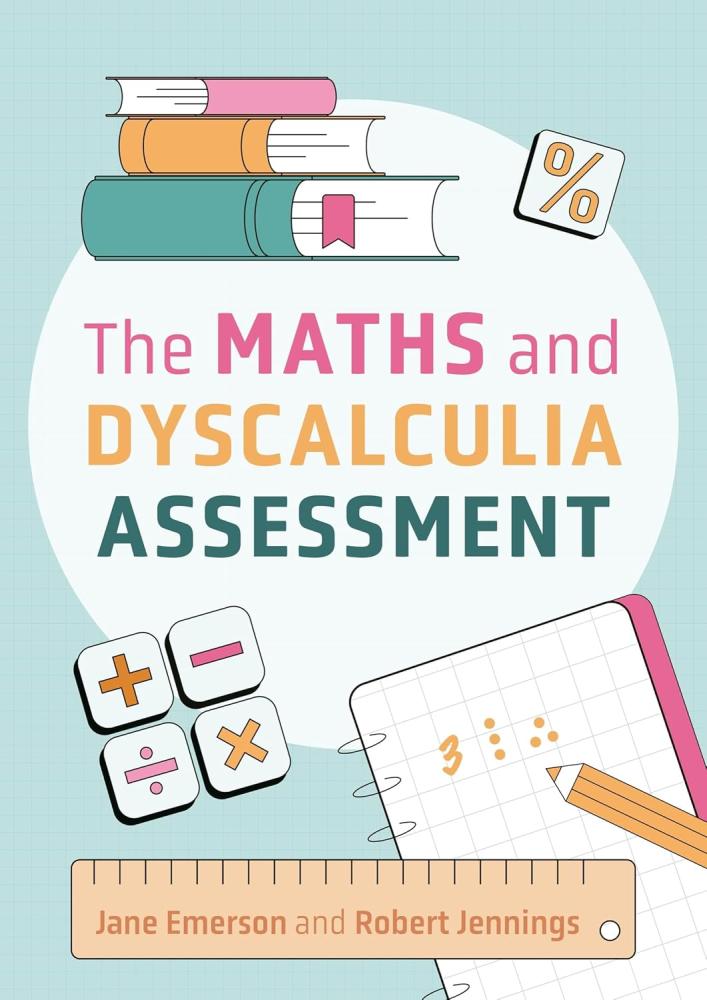
The Maths and Dyscalculia Assessment (MDA) is not a standardised test, it has been developed to have an informal structure, with a step-by-step approach that builds on existing knowledge. It provides the assessor with information on the strengths and weaknesses of the student, helping them understand the reasons behind each profile. The test has been designed to help find the teaching interventions that best suit the student’s maths learning needs.
There are plans to develop the MDA to include standardised scores on both accuracy and time taken to complete each section. Of course, it will take time to collect the data and confirm the validity and reliability of the test. Currently the test comprises of the manual and two accompanying test kits, each with an assessor booklet and student booklet, which you can download online.
There are 19 sections in each test kit to cover basic topics such as number sense, counting, sequencing, writing and reading numbers, early calculation, doubles and halves, components of numbers, number bonds for 10 and above, place value, addition, subtraction, multiplication, division and more advanced topics such as word problems, fractions, decimals, percentages, measurement and conversions.
The test age group is 6-18 years but it can be used with adults and takes around 60 minutes to complete, depending on the individual’s maths abilities. The assessor can observe and record key information about the student’s use of strategies for calculations.
The benefits of using the MDA include:
• Provision of statistical data to back up your observations
• It allows you to specify a diagnostic analysis of the individual in order to plan teaching interventions
• The easy-to-use format means it can by used by educational psychologists, teachers, SENCOs and teaching assistants or parents
• It measures the time the student takes in minutes/seconds for each section to enable you to see where they are taking longer than expected to complete a calculation, helping you to target interventions
• It allows repeat testing after six months to review progress as a result of planned interventions.
The manual is divided into three sections. The first looks at what dyscalculia and maths difficulties are, covering background information regarding research and the new dyscalculia definition (2025 SASC), and the nature of maths learning. Information on other causes of difficulties with maths is also provided, discussing dyslexia, Developmental Coordination Disorder (DCD or dyspraxia), and ADHD, as well as social, economic and cultural factors. This first section also covers maths anxiety.
The second section provides a step-by-step guide on how to administer the MDA. The third section is a guide to interpreting the results, explaining what the errors may indicate and guidance on developing an intervention plan.
Appendices include a questionnaire for gathering background information and other templates for a summary report and a teaching plan. Also included is a list of useful resources for both parents and teachers for further information, advice and ideas for games.
This is an extremely useful, well-thought-out manual providing a wealth of information that has been thoroughly researched. It is also written in a plain English style and so can be easily understood by both practitioners and parents.
The article was originally published in The Dyslexia Review, Volume 35, Number 2, Autumn Winter 2025.
Would you like to purchase this product? If so, you can do so here in the shop!